
Can One RV Camera Replace FOUR Dash Devices?
Our Real-World Haloview BT10TPMS Review While Towing Our Brinkley Fifth Wheel
Anna Sharp
12/15/20254 min read
After more than a year and a half of full-time RV life towing a fifth wheel, our truck dash had slowly turned into what we jokingly called mission control. A backup camera monitor, a TPMS screen, a dash cam, GPS — all competing for space and attention on drive days.
We’ve used several RV camera systems over the years. They all did their job, but none of them really simplified the experience. So when Haloview reached out and asked if we’d be interested in testing their BT10TPMS, a system that combines a rear camera, TPMS, and dash cam into a single mirror-mounted display, it immediately caught our attention.
This post walks through our experience installing, dialing in, and using the BT10TPMS across real travel days as full-time RVers.
👉 Watch the full video review here
Why We Wanted a Cleaner RV Dash
Drive days are a big part of RV life, especially when you’re towing a longer fifth wheel. Fewer distractions, better visibility, and less visual clutter all add up to a calmer, more confident driving experience.
Our previous setups — including the factory-installed Furrion system on our Brinkley and a Haloview BT7 we used in a former rig — both provided clear images. The downside was that each required a separate monitor mounted on the dash, which over time added to clutter and limited visibility.
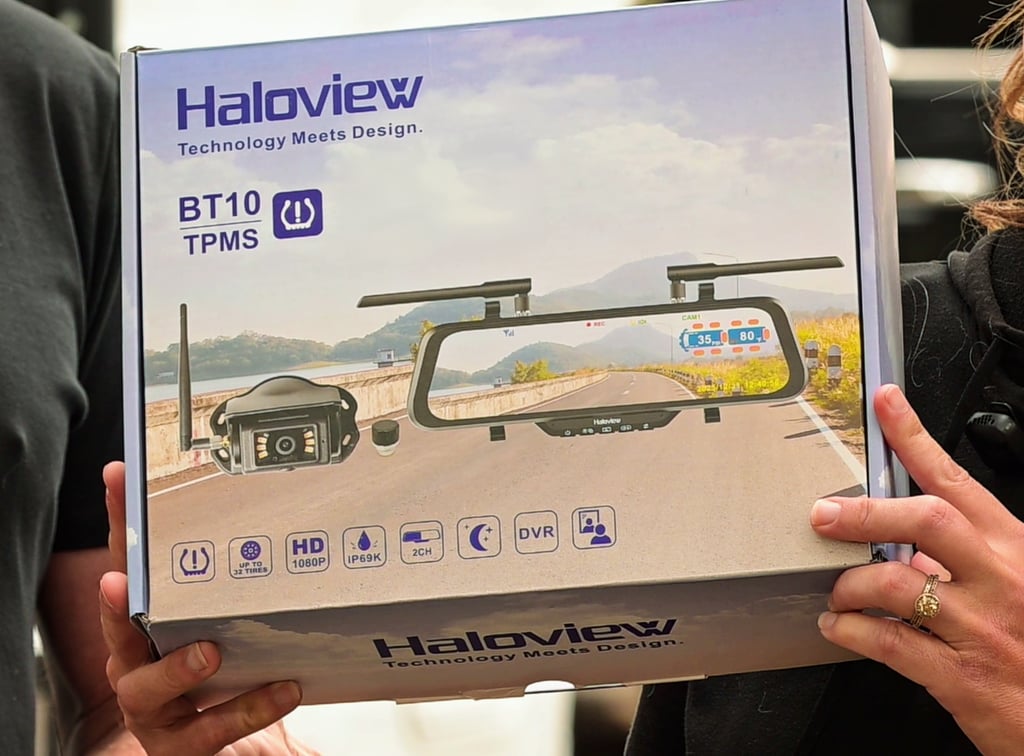
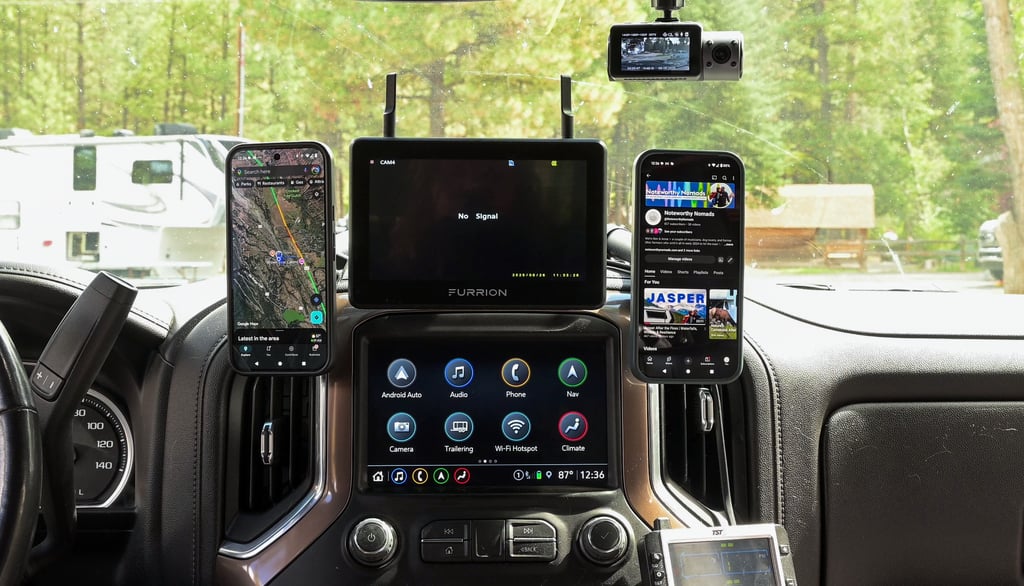
What appealed to us about the BT10TPMS was the idea of consolidation:
Rear backup camera
TPMS (tire pressure monitoring system)
Dash cam
All integrated into a single rearview mirror
That combination felt like a smart fit for how we travel.
Installation & Initial Setup
The installation process was straightforward and similar to other RV camera installs, with a few key details specific to our rig:
Replacing the factory rear camera with the Haloview rear camera
Running an antenna extension from the rear of the rig toward the front
Installing the Haloview TPMS repeater underneath the rig, approximately three feet in front of the rear axles
Tapping into the existing power source from our TST TPMS repeater, rather than running a new dedicated power line
Pairing the TPMS sensors using a USB battery pack so each wheel could be assigned correctly during install
Using the existing TPMS power source kept the install clean and avoided unnecessary wiring runs, while mounting the repeater near the axles aligned well with signal reliability for a longer fifth-wheel setup.
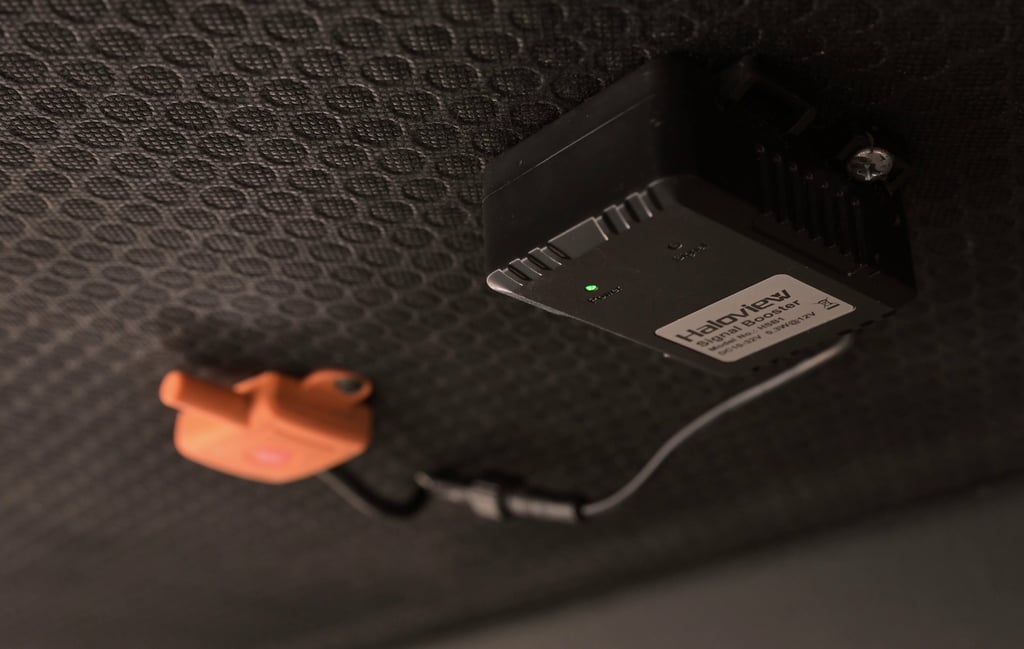
It’s also worth noting that Haloview strongly recommends brass valve stems for the TPMS sensors. This is an important consideration if your rig currently has rubber, plastic, or aluminum valve stems.
Mirror Display & Dash Experience
The mirror-mounted display was one of our favorite design choices right away. Unlike our previous setups — including the Haloview BT7 and the factory Furrion system — which required dedicated dash-mounted monitors, the BT10 integrates directly into the rearview mirror.
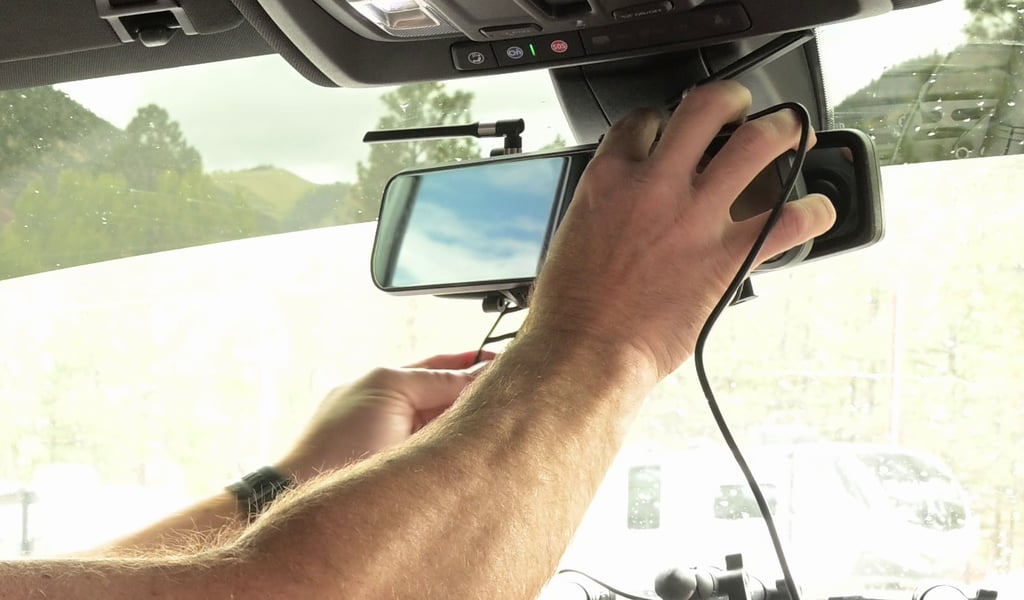
The BT10 mirror is slim enough to function as a normal mirror when the screen is off, which we really appreciate. It blends into the cab instead of adding another piece of hardware competing for space. Over time, that cleaner dash has made drive days noticeably more comfortable.
Dialing in Signal Reliability
As with any wireless system on a long RV, multiple factors affect signal strength. Through testing and adjustments, we found a combination that delivered consistent, reliable performance.
Two things made a noticeable difference:
Antenna Extension Routing
We originally had excess antenna cable coiled tightly. Once we re-routed that slack into a single, longer loop instead of a tight coil, signal strength improved immediately.
Mirror Antenna Orientation
Because the mirror sits close to the truck’s ceiling, antenna placement options are limited. After experimenting, we found that pointing both mirror antennas toward the passenger side provided the most stable connection during travel.
After dialing in these details and pairing them with the updated camera hardware, the system has performed reliably across multiple travel days and hundreds of miles.
Real-World Performance on Travel Days
Once everything was set up and dialed in, the Haloview BT10TPMS became the most reliable rear camera system we’ve used in nearly two years of RV travel.


The image quality is clear and on par with other premium RV camera systems we’ve used. The biggest improvement, however, is what’s no longer on the dash. Fewer screens mean fewer distractions, and that’s something we’ve genuinely enjoyed on every drive day since.
One feature we do miss is side camera support, which we previously had on the BT7. It’s not a dealbreaker for us, but it’s worth noting if side cameras are a must-have for your setup.
Our Final Thoughts


The Haloview BT10TPMS has been a great upgrade for our RV setup. It delivers clear visibility, reliable performance, and most importantly for us, a much cleaner dash.
Every RV is different, and wireless systems can be influenced by many variables. What matters to us is that the end result has been consistent, dependable, and enjoyable to use on real travel days.
If you’re looking to simplify your RV dash and reduce the number of screens in your line of sight while towing, this system is absolutely worth considering.
Haloview Discount Code
Haloview provided us with a discount code to share:
👉 Haloview BT10TPMS (Affiliate Link)
💸 Use code NOMADS for 5% off on Haloview’s official website.